
What is Fidelity in Healthcare Simulation?

Sim & Skills have decoded the what, why and how of fidelity so you can make informed integration decisions that deliver the best outcomes for your simulation goals.

Fidelity in Healthcare Simulation

Fidelity in healthcare simulation refers to how closely a simulated scenario resembles the real-life clinical practice situation. Fidelity spans not just the equipment realism but the conceptual, environmental and emotional experience created for learners in their preparation for real world practice.

The Fidelity Debate

There is debate over what fidelity refers to; the realism and technology of patient simulators, the degree of exactness and believability of the simulation, or the overall contextualisation of the simulation. Some scholars argue that ‘high-fidelity simulators’ are better described as a simulation modality, or types of equipment (Carey & Rossler, 2023), while others emphasise the capabilities of the physical equipment such as patient simulators (Choi & Wong, 2019). Despite the debate, there are undisputed benefits to realism in healthcare simulation.

“In simulation-based health professions education, the concept of simulator fidelity is usually understood as the degree to which a simulator looks, feels, and acts like a human patient. Although this can be a useful guide in designing simulators, this definition emphasizes technological advances and physical resemblance over principles of educational effectiveness.”

(Hamstra, et al., 2014)

The Benefits of Fidelity in Healthcare Simulation

  • Supporting skill transfer to clinical practice
  • Enhances learner engagement and therefore reflection and retention
  • Adaptability to different risk levels and learning objectives
  • Builds confidence and psychological safety

Core Categories of Fidelity

As many as 9 different categories of fidelity have been identified in simulation literature. We have consolidated them into 4 key categories where fidelity can be leveraged:

Physical Fidelity

(including: Equipment Fidelity, Structural Fidelity, Perceptual Fidelity)

Fidelity that engages the senses – what the learner sees, hears, feels and smells.

Includes:
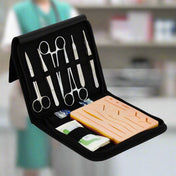
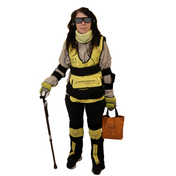
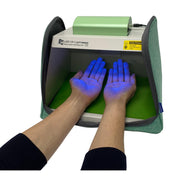
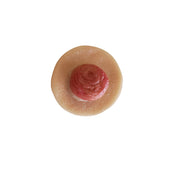
Simulators, Task Trainers, Medical Equipment, Setting Realism

Conceptual Fidelity

(including: Functional Fidelity, Semantic Fidelity, Objective Fidelity)

The simulation accurately reflects and progresses as the
situation would in real life clinical setting,

Includes: Vitals, Results,
Cause and effect relationships and anticipation

Environmental Fidelity

The believability of the context of the caregiving setting.

Includes: Lab vs in situ, Noise, Interruptions, Roles, culture and hierarchy

Psychological Fidelity

(including: Emotional Fidelity, Experiential Fidelity)

The extent to which the simulation elicits the psychological processes necessary for in person practice. Its believability.

Includes: Emotional engagement, Sense of responsibility and stress, Realistic interactions

Levels of Fidelity in Healthcare Simulation

Fidelity can vary by degree as well as type. Low, medium and high fidelity simulations are all widely utilised and the combination and types and levels foster learners’ belief in the scenarios.

  • Lisa Female Patient Simulator | Sim & Skills Ltd

    High-Fidelity

    Best for complex, high-stakes situations.

  • CAE Juno Nursing Skills Manikin JUN-100-M | Sim & Skills

    Medium-Fidelity

    A middle ground between realism and flexibility

  • Low-Fidelity

    Ideal for foundational skill acquisition

Matching Fidelity to your Learning Objectives

Higher fidelity doesn’t equal greater degree of learning. It is important to match the fidelity level with the learning outcomes and objectives required of the scenario. For example, high-fidelity simulation was found to aid core competencies such as CPR, infection control and diagnostic reasoning in nursing education (Daneshfar & Moonaghi, 2025), while Kim, Park & Shin (2016) found no significant difference in knowledge outcomes between low and high-fidelity other than a learner preference for the psychological immersion.

Key Takeaways

Overall, there are types and levels to healthcare simulation fidelity. It is debated whether patient simulators enable the varying degrees and types, or if they’re a component modality to a bigger picture of immersion. While a high degree of fidelity has benefits in application to clinical training, the desired learning outcomes of the simulation scenarios must take priority. The levels and types of fidelity should serve learning objectives, not distract from them.

We're Here to Support You

At Sim & Skills we have everything you need to succeed in healthcare simulation.

We have a wide range of patient simulators and task trainers, at various fidelity levels, so you can find the most suitable equipment for your training needs.

Not sure what product will suit your needs the best?


Get in touch below for advice, guidance and ongoing product support 👇

Contact form

References and Further Reading

Carey JM, Rossler K. The How When Why of High Fidelity Simulation. [Updated 2023 May 1]. In: StatPearls [Internet]. Treasure Island (FL): StatPearls Publishing; 2025 Jan-. Available from: https://www.ncbi.nlm.nih.gov/books/NBK559313/

Choi, Y. F., & Wong, T. W. (2019). High-fidelity simulation training programme for final-year medical students: implications from the perceived learning outcomes. Hong Kong medical journal. 25(5), 392–398. https://doi.org/10.12809/hkmj197898

Daneshfar, M., Moonaghi, H.K. The impact of clinical simulation on bridging the theory practice gap in nursing education: a systematic review. BMC Med Educ 25, 1216 (2025). https://doi.org/10.1186/s12909-025-07790-8

Hamstra, S. J., Brydges, R., Hatala, R., Zendejas, B., & Cook, D. A. (2014). Reconsidering fidelity in simulation-based training. Academic medicine : journal of the Association of American Medical Colleges89(3), 387–392.
Reconsidering fidelity in simulation-based training - PubMed

Kim, J., Park, J. H., & Shin, S. (2016). Effectiveness of simulation-based nursing education depending
on fidelity: a meta-analysis. BMC Medical Education, 1-8. Effectiveness of simulation-based nursing education depending on fidelity: a meta-analysis - PubMed

The minimal relationship between simulation fidelity and transfer of learning - PubMed

Healthcare Simulation Dictionary | SSH